Blog
Washington, DC SMA Advocacy and Research Trip Update
April 22, 2012 by Bill Strong
Last week, I flew back to Washington, DC for two days packed with meetings on Capitol Hill, the FightSMA researchers conference, and the FightSMA Board meeting. Although much too quick, it was an extremely productive trip.
Here's an update on what went down:
Legislation Update
As most of you know, Victoria and I jumped into the deep end of advocacy in July 2008 with our PetitionToCureSMA.com. And ever since we've been very active, following FightSMA's lead, building a platform for spinal muscular atrophy (SMA) on Capitol Hill. We regularly meet with our incredibly supportive Congresswoman, Lois Capps, and other Congressional leaders, and the great news is that all of the collective hard work is paying off!
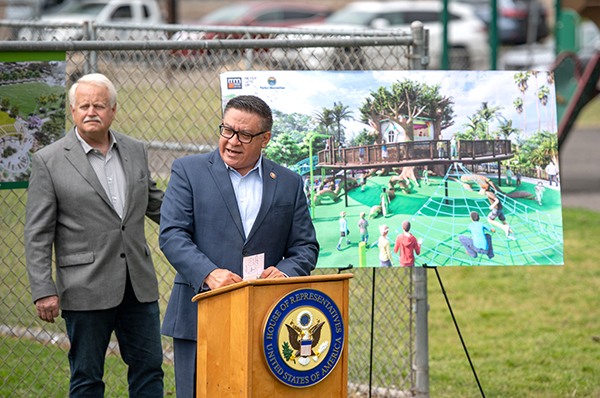
In 2011, our Congresswoman, who has always made children's health issues a personal priority and is a distinguished Member of the Subcommittee on Health within the Energy & Commerce Committee (where the rubber hits the road for these issues), offered to lead SMA legislation in the challenging environment of the 112th Congress. While on my trip I had the pleasure of visiting with her staff in DC once again for updates and strategy discussions.
The encouraging news is that things are moving and it appears that we have a very unique opportunity to get legislation passed that would have a very positive outcome for SMA. There is still work to be done, but there is no doubt that the continued efforts at the highest levels are paying off and we are as hopeful as every that we will get something done for SMA as a result.
We greatly appreciate the support, persistence, and creativity that Congresswoman Capps and her staff have shown our family and our cause. It's not lost on us that they have countless worthy causes and initiatives to support and it means the world to us that the Congresswoman has continued to make SMA a priority.
FightSMA Researchers Conference Update
I've been attending the FightSMA research conference for three years now and I always leave encouraged by the direction and momentum of all of the promising SMA research programs. Every year the core group of leading SMA researchers, many of whom have been working on SMA for 20+ years, and a select group of up-and-comers are invited by FightSMA for two full and exhausting days of in-depth information sharing and debate on the state of their research. It's a unique format in that it is not just a presentation of information, it is an opportunity to learn from one another, dissect findings and hypotheses, and work together to problem solve. No politics. No fluff. Just good old fashioned collaboration and discussion. And the researchers always go out of their way to tell us how much they love it and look forward to it every year.
In addition to the researchers conference, FightSMA also organizes a *free* live webcast broadcast around the world with a panel of the leading SMA researchers and clinicians. It's an open format with Dr. Alex MacKenzie emceeing and the primary goal is to answer questions posed by those in the SMA community. I found this year's webcast very productive and I think it did a great job of answering questions and summing up the state of the major research programs: large animal model (funded by theGSF), gene therapy (funded by theGSF and others), oligonucleotides, and compounds. If you missed it, FightSMA will be posting video on their website soon.
My take on research -- I'm really encouraged and a few programs are accelerating nicely through the process. Every year that I have been coming to these there are more incredibly intelligent people working selflessly day and night to move SMA research forward. From where I sit, that's a really good thing and maybe one of the best indicators of the mature and cutting edge state of SMA research paths. Old approaches. New approaches. Good results. Bad results. Steps forward and back. There are several research programs in the current key areas of focus -- gene therapy, oligonucleotides, and compounds -- with the potential to unlock key pieces to the SMA puzzle that are in or should be entering human clinical trials in the next 12-24 months. That's wonderful news and it will be great to see these progress through the rigorous and lengthy FDA process.
Taking a step back, I believe in continuing to support as many intelligent teams working on a broad spectrum of research as possible. There are still many questions to be answered and new findings continue to present new questions. Things aren't going to go in a straight line -- they never have and they never will. We've got to keep an open mind about this stuff and not become overly myopic on any one approach or program. I know it can sometimes feel like things are moving at a snail's pace, but it's important to realize how far things have come in a very short period of time. And that's due to the unshakeable determination of SMA families over the last 20+ years and the unbelievable dedication and collaboration of the SMA research community. If you truly think about where we are as a rare disease community, it's very, very encouraging.
All-in-all, it was a great trip. Oh yeah, and I got to see the space shuttle Discovery fly over DC and land at Dulles Airport for the last time before retiring. Check out this picture from Dulles Airport. That's the space shuttle Discovery parked behind my American Airlines flight home. It eventually moved and we departed on time ![]()